The Sea Library: A Conversation with Anna Iltnere
There are countless ways to catalogue the sea. Anna Iltnere is doing it book by book.
In her family’s century-old wooden home in Jūrmala, Latvia—on a dune peninsula between the River Lielupe and the Gulf of the Baltic Sea—Iltnere tends a collection of more than a thousand books devoted to the ocean. She opened the Sea Library in 2018, transforming a room in her home into a private library, a long-term artwork, and what she calls “a harbour of stories about the sea.”
I discovered the Sea Library while researching my own book project about sea creatures and the stories we tell about them. Someday, I hope to visit its shelves in person. For now, Anna and I corresponded across the sea for this interview.
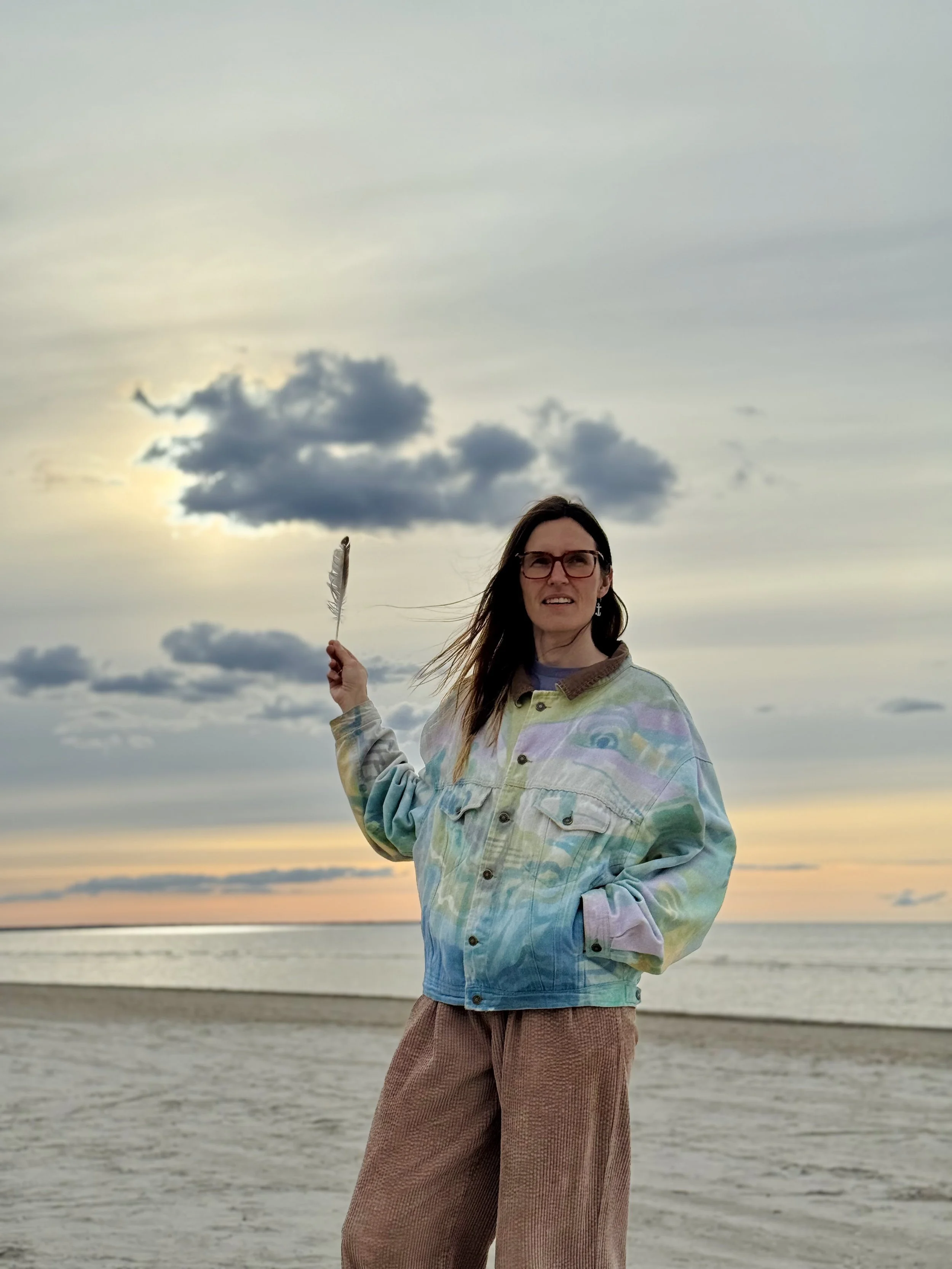
Anna Iltnere of The Sea Library
Entering the Sea Library
When people first encounter the Sea Library, they often respond with wonder. Why do you think this project resonates so deeply?
I can only guess from my own point of view.
I have always loved places like this. Bookish, yet untamed. A bit crazy, but also seriously devoted. Rebelliously stubborn in their mission. Fuelled by love, passion, curiosity, and creativity. Kind, open, inspiring places that exist somewhere on the edge of life and art, reality and imagination.
There's the Wind Museum in Trieste, Italy, dedicated to the fierce Bora wind. It keeps a collection of bottled winds sent from all over the world, including a bottle of Baltic Sea wind that I sent myself. When I heard about it, an intimate non-profit “museum in progress” dedicated to the wind, I was so inspired.
Then there’s the legendary Singing Wind Bookshop in Benson, Arizona, sometimes called “The Bookstore at the End of the World.” Located on a 660-acre cattle ranch miles from civilization, it features the largest collection of Southwestern literature in the U.S. Reminds me of Vivienne Westwood's punk shop, World's End, in London with its wonderfully strange clock that counts thirteen hours instead of twelve and ticks backwards.
And then there's the Future Library in Norway, a project by the Scottish artist Katie Paterson. Every year, for one hundred years, a chosen writer contributes a manuscript that will remain unread in the Future Library room on the upper floor in Deichman National Library in Oslo until 2114. That’s a year when all the texts will finally be printed on paper made from a forest planted especially for the project. It’s an extraordinary act of faith in the future. Another of Paterson's works was a telephone line you could call to listen to glaciers melting in Iceland.
Projects like these give me courage and continue to inspire me, even if perhaps unconsciously. Because, in the beginning, I didn’t set out to create something special. All I wanted was to share my books with other readers, that’s all. What followed was a tide of kindness and generosity that I never expected. The community around the world responded in the most incredible ways and now this room is full of books and postcards and sea memorabilia, both collected by me and sent by strangers, many of them now close friends: have you received a ‘mermaid’s purse’ or ray’s egg sack in an envelope? The Sea Library has. There are crocheted corals growing in corners, and artworks crowding every free space on walls. It’s very cosy here. Come!
At what point did the Sea Library become more than a personal collection?
I bought RisingTideFallingStar by Philip Hoare for my 33rd birthday and read it. The almost sinister power of the right book at the right time. You can never underestimate the impact that a book can have on a human being!
It completely blew my mind – the way it relates to the sea, the way it talks about it. I fell in love with its voice and wanted to share this book with everyone I could. I soon realised that it isn’t the only book I am pushing in the hands of my family and friends. My growing collection of sea books couldn't wait any longer for the perfect moment, or for the perfect place, or the perfect funding. I would never have enough money to do something like that. I still don’t. So I just jumped over this obstacle as if it wouldn’t exist. The following summer, I announced on social media and in a small local newspaper that this room with 100 books was now the Sea Library and opened my doors to strangers.
Maybe that’s why I call Philip Hoare the godfather of the Sea Library, and his friend Angela Cockayne – an artist whose work is deeply rooted in the sea and its inhabitants and the environmental aspect – its godmother. What feels even more miraculous, is that they have both been there for the Sea Library throughout all these years and I am deeply grateful for that. It means a lot.
I'll turn 43 next summer and there are now 1000 books about the sea.
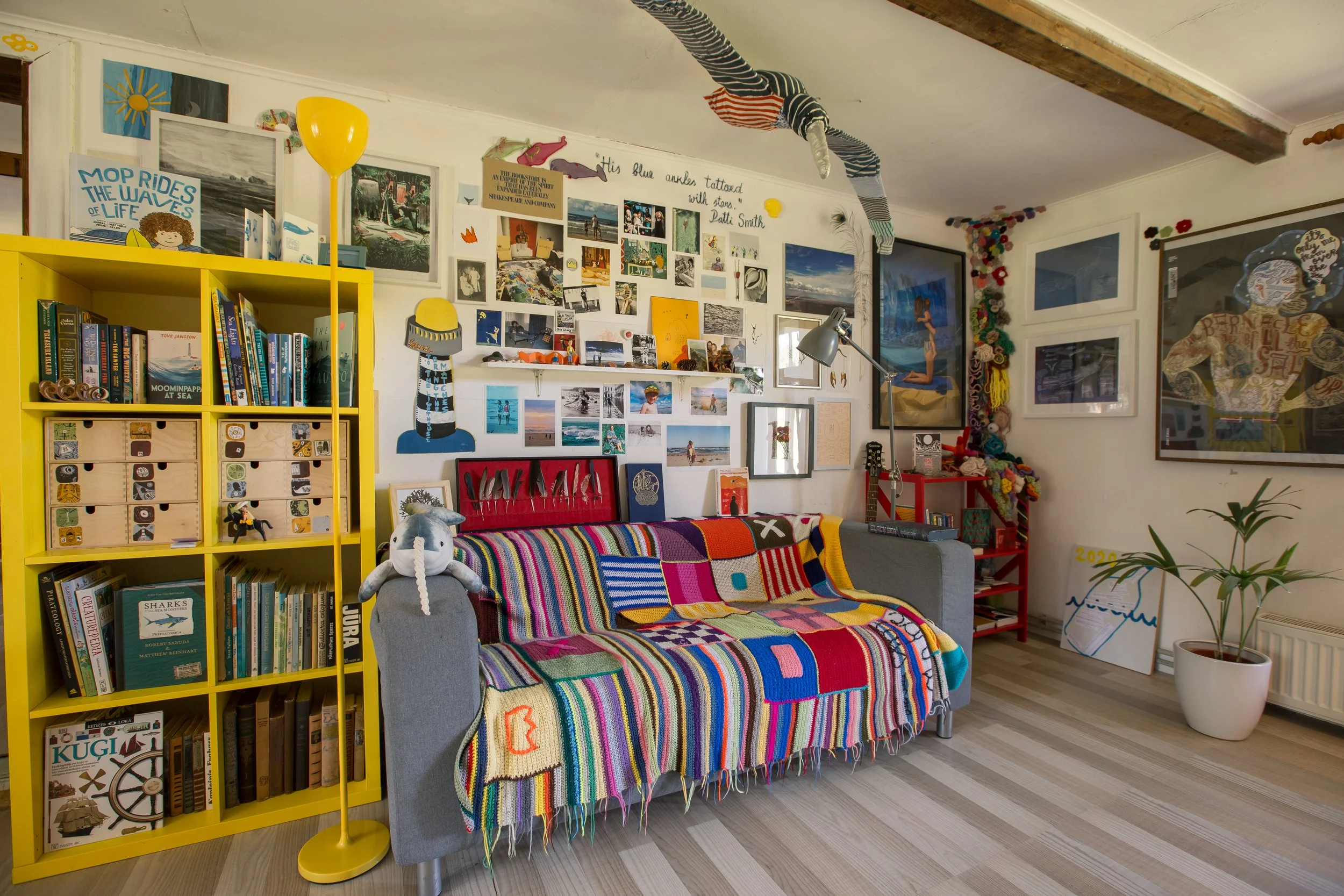
a look inside the Sea Library
If someone could understand the Sea Library through one object — a book, letter, shell, or photograph — what would you place in their hands?
What a wonderful question. Probably a hagstone. I've found only one in my life, on the very first day of a new year. I'd always wanted to find one, and it's still here in the Sea Library. I hold it whenever I do Zoom or radio interviews. I believe it helps.
A hagstone is just a stone, right? Real and tangible, cold when it has sat on the shelf for too long, warmer in the sun or in the palm of your hand. But then there's the hole inside it formed naturally by the sea (or sometimes something else). An ordinary stone with a hole in it is just a stone, until it isn't. So many myths have been woven around it, so many different stories.
There's something of the Sea Library in that, too: an ordinary room full of books that some people can't quite believe is real, that others tell stories about, and that holds so many different ways of telling stories about the sea, both mythical and scientific. Yes, the Sea Library is like a hagstone.
The Sea as Archive
If the Sea Library is an archive, what is it preserving?
I think it is preserving our tireless wish to understand the sea – to find answers, to work out why so many of us are so mesmerised by it. There are already many answers on its shelves, but I'm still looking for one more. It has to do with our relationship with the sea. Why are many of us so drawn to it?
The sea itself doesn’t need the Sea Library; it does perfectly well without us. It’s we, humans, who need these stories. We breathe them in and out as we try to make sense of the ever-changing world around us. That’s what the Sea Library preserves, in a way: this deeply human wish to understand something that will always remain just beyond our reach. The pull of the sea.
Then there’s also the fact that in the 21st century we still know so little about it. So much of the sea is still unexplored, unseen. I can’t decide which side I’m on: whether it’s better to leave it that way, not letting human beings crawl into every crevice, or to keep discovering new species that continue to amaze me.
Either way, there’s still so much to learn about our relationship with the sea, including how to behave around it. Not trawling its bottom, for example, would be a decent start.
What kinds of sea stories are still missing from the shelves?
There can never be too much diversity on the shelves in many ways so I try to work on that from paycheck to paycheck.
I try to balance the geography of the Sea Library. I think about the places the books describe, the countries the writers come from, the languages they are written in, and the languages they are translated into. Most of the books in the collection are published in the UK or the USA, so I also make a conscious effort to broaden that perspective.
A few years ago, I realised there were so many sea books for adults and almost none for children. My husband built a large bookshelf in the corner of the room, and I started filling it with books for children and teens. At the time, I was weaving colourful bookmarks and selling them to support this goal. One bookmark funded one new book. Now the children's collection has grown to nearly 200 books, but I hope to keep adding more. There are so many beautiful titles that teach about the sea, the ocean, and the people who live along the coast with wisdom, curiosity, and care.
Storytelling is the key to understanding – and ultimately loving – the ocean and its inhabitants.
One thing I'm especially proud of is that the Sea Library shelves hold the work of many, many women: writers, translators, and illustrators whose voices help shape how we imagine and understand the sea.
What is missing the most? The story that is your favorite sea story. I want to hear that, read that and show it to others.
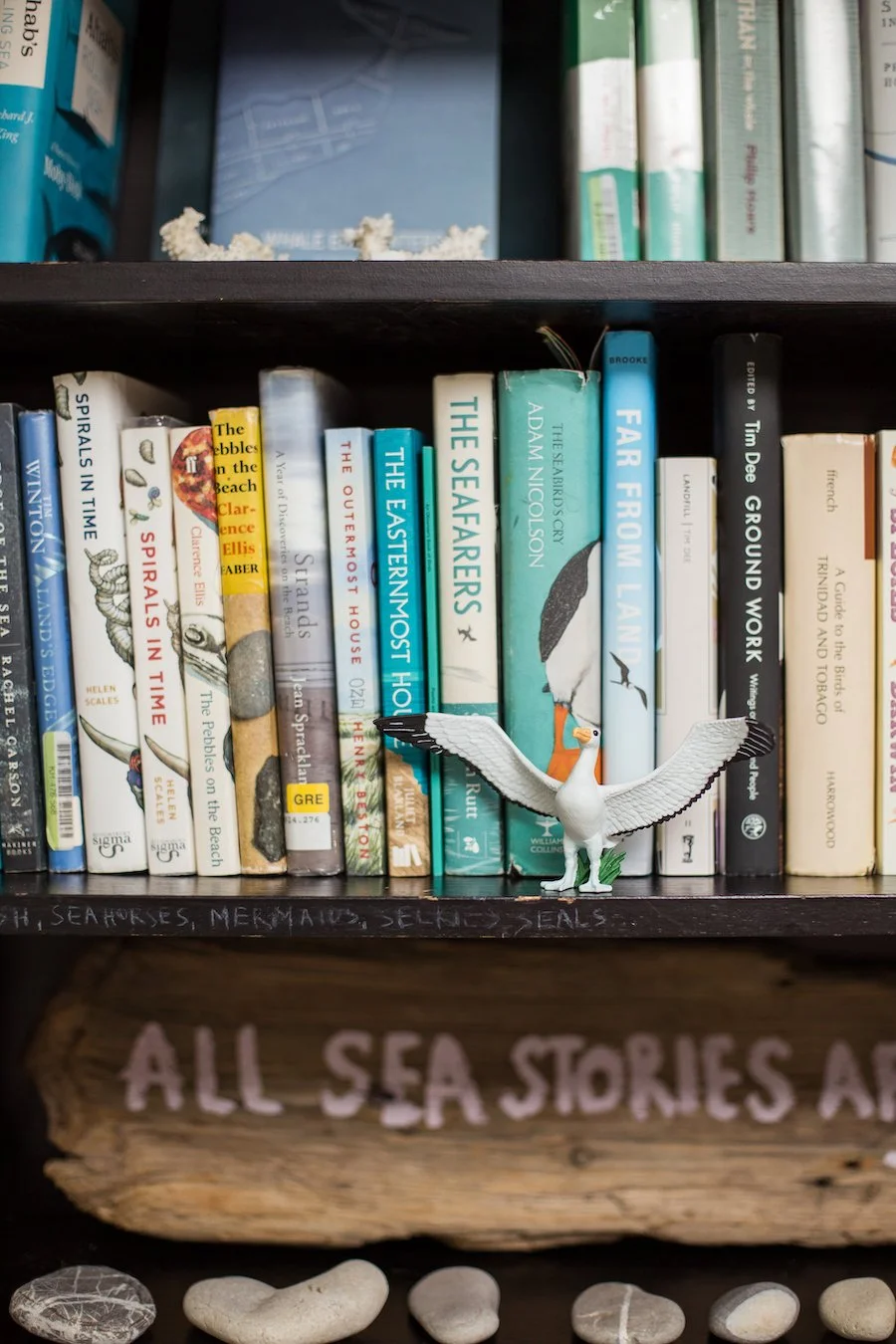
a shelf of the Sea Library
How do you decide what belongs in the collection?
There are so many seas – both geographical and mental. There is the sailor's sea, the surfer's sea, the swimmer's sea, the diver's sea. There is the sea as painted by artists, and the sea explored through the eyes of scientists. All these seas, and many more, belong in the collection.
And if someone donates a book about the sea, I never say no, because who am I to judge if for them that is a sea book?
There are poetry books, children's books, fiction and non-fiction. There are art catalogues, maps, and handmade books. And there are even books about lakes, rivers, ponds, and streams. I've come to realise that the Sea Library might have started leaking into other bodies of water here and there…
Your “Letters to the Sea” project invites people to write directly to the ocean. What changes when the sea becomes the recipient?
I've noticed that writing a letter to the sea is a bit like swimming – metaphorically. You take off all your masks and clothes, stand there naked and goosebumped, and dive into the depths. The sea holds you, and you whisper something just as deep. She's a listener. So is the paper. It absorbs secrets. It’s very interesting to observe that. How the writing changes when you start your letter with Dear Sea.
Have certain emotions or themes appeared again and again in those letters?
Childhood memories – summers by the sea with mum, dad, friends. Painful moments, too, breakups, even deaths. And nearly always there's this urge to get back to the sea, not to be too far from it for too long, to run to it when there's too much of everything else. Also swimming, and noticing nature – both what grows in the dunes and what lives underwater. In the letters written by kids – gulls stealing your food feature a lot, also – ice-cream.
What do handwriting, postage, and physical books make possible that digital communication cannot?
The joy of receiving a letter or postcard never gets old. Looking closely at a foreign stamp, opening the envelope, unfolding the paper, seeing the handwriting – and sometimes there's something more tucked inside: a photograph, a small painting, a drawing. It's a beautiful tradition, sending letters. I still have the ones my late grandmother wrote to me. Handwriting holds a piece of a person inside it forever – the movement of their hand, the particular way their fingers learned to form each letter.
And there's the imagining, too: what road did this letter take to reach the Sea Library? Did it fly? Did it cross the sea?
Recently I took part in a thesis where the Sea Library was one of the case studies, and part of it involved exchanging handwritten letters with the researcher instead of emails. All of hers arrived soaked, every single one – each stamped, in Latvian, "Arrived in wet form." I hadn’t seen such a stamp before. Have you ever received a wet email? A soaked WhatsApp message? There's something the physical world can do that the digital one simply can't reach.
Domestic Space, Women’s Work, and Public Imagination
The Sea Library lives in your home. How has that shaped the project?
That’s shaped me even more, maybe. My best friend always says I didn’t create the Sea Library – the Sea Library shaped me instead. I don't really know what I was thinking, announcing to the world: come, here is an open library for you. And yet that's exactly what I did.
People arrive by appointment, so I have time beforehand – to clean the house, to fold the pants and put them away. But that is healing in itself. I'm an open person, but a shy and private one too, so every visit is still, somehow, a step outside my comfort zone. And yet the moment someone actually arrives, I'm so happy. To talk, to hear their stories, to show them around, or to simply leave them be if they'd rather sit quietly and go through the shelves alone. I grow with every visitor, with every stranger who sometimes even becomes a friend.
I know it's just as unusual for them – stepping into a stranger's home out of curiosity. But I think that's a good thing for both of us. The Sea Library has changed me: taught me to trust people, to talk to strangers, to discover people themselves as books that want to be read. I love that the Sea Library lives here, it is always so close to me, I can always go inside and just feel it. Add something, read something. Pack some books for readers abroad.
Do you see the Sea Library as part of a tradition of women’s creative work emerging from domestic spaces?
I watched an interview with Marina Abramović recently where she suggested cave paintings were probably made by women, while men were out hunting. I can't deny that my own window of deep breath – the space to stop and think about what came next – was maternity leave with my youngest son. In Latvia, you can take anywhere from one to two years. That leave became the door out of my previous career and into my own voice. Pushing the stroller to the sea and back, day after day, gave me so much time to think. And once my son started sleeping through the night, I could wake before the rest of the family and go into a nearly empty room with a desk and a few books, and start reading Homer – the Iliad, the Odyssey – because I knew I wanted to begin reading about the sea, and there it was: the oldest text there was. That was the invisible, unconscious start of the Sea Library, which now lives in that very room. So – yes, I suppose I could say yes to your question.
Although I've always thought of myself without gender attached. I'm a creative soul, born into a family of artists, actors, architects – a kid who loved to read and be outdoors, climb trees, who grew into a journalist and then grew tired of running around the world with a pen and a dictaphone. The move to this house, the choice to stay and think and decide carefully what to do with this one wild life of mine – that's what shaped the Sea Library, more than gender did. I'm not an artist, and yet it sometimes feels like one long, slow artwork, growing in this room like a coral reef of love. And yet – yes, maybe there is something in it. This caring: for my boys, for this house, for the garden, and now for this library of sea books too.
The Sea Library is intimate and handmade, yet it feels expansive. How do you think about scale?
One of my favourite fairytales as a child was about an old man's lost mitten. A fly crawls inside to escape the cold, then a mouse, then a rabbit, a wolf — and then a bear knocks and lets itself in too. I remember thinking: that must be an enormous mitten, how does everyone fit? And how are they all so friendly in there, each one inviting the next guest to come warm up? What ruins it, in the end, is a rooster. He crows so loudly that everyone panics and flees, tearing the mitten apart as they go.
The Sea Library is a bit like that magical mitten. People often ask what I'll do when I run out of room. I don't know — it still fits. I think it has hidden depths, the way the sea does.
It's been expansive in another sense, too – the sense of the world opening up for me. Before this, I travelled constantly as a journalist, and I always felt claustrophobic, jet-lagged, spread thin. Here, staying in one place, walking the same paths to the river, through the forest, down to the sea, for more than ten years – the world has grown larger, not smaller. More delicate. More detailed. It's like travelling vertically instead of horizontally. Going deep instead of going far. And the Sea Library has opened so many doors because of it — friends from countries I've never visited, stories, books, letters, postcards. Sometimes, to reach far, you have to stay put. To anchor, and observe.
Ecology, Climate, and Love
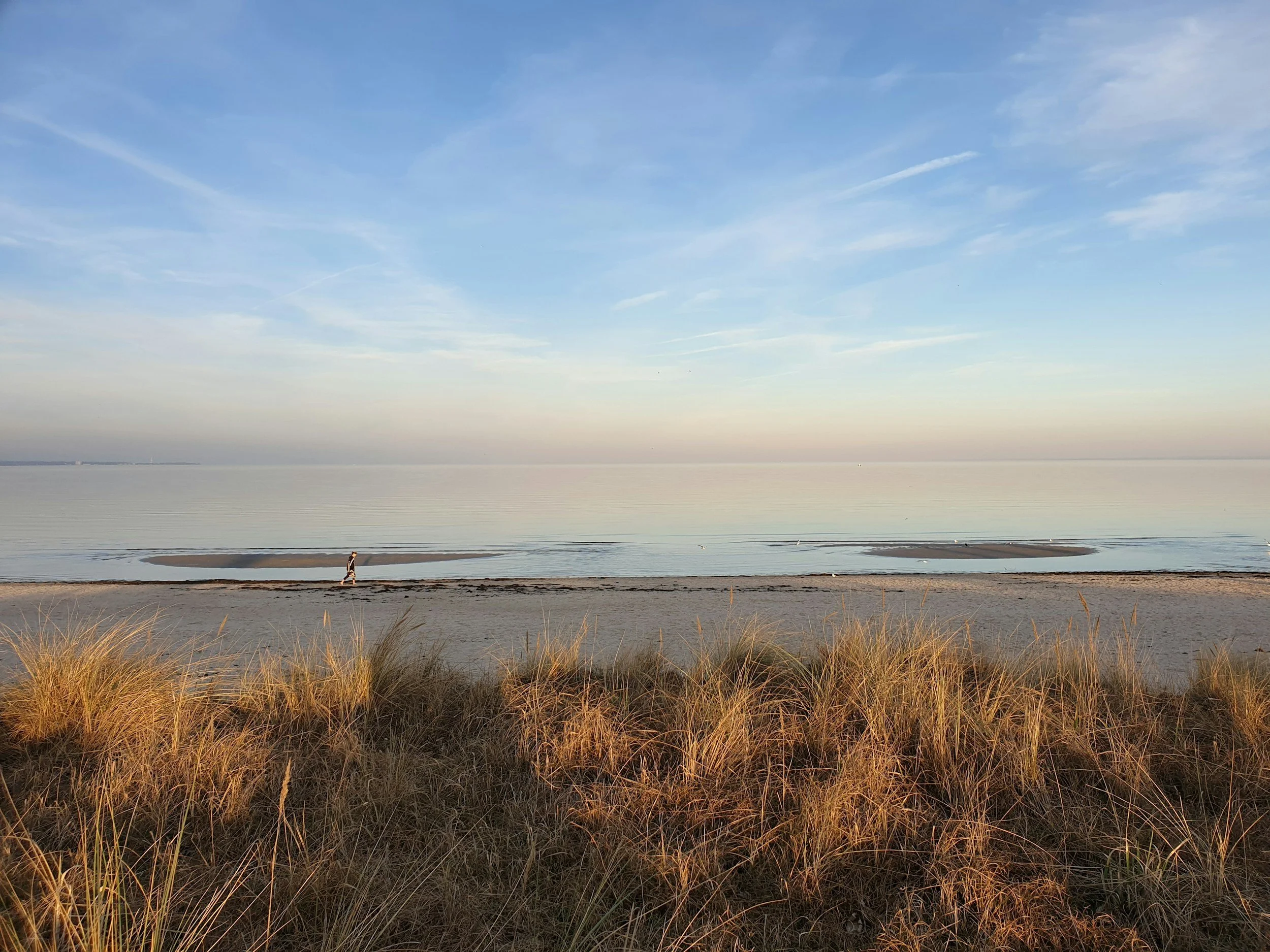
shores of the Baltic Sea, home of the Sea Library
How do you hold together enchantment and ecological grief?
I am not built for nostalgia or grief. There's never a better time than today, because that's what we have. Nothing else. We have today. And today is quite beautiful. We live in challenging, unfair, even mad times, especially now, but there's no use in complaining. How will you spend today so that tomorrow can be a little bit better? There’s so many good things around us.
Can literature deepen our sense of responsibility toward the sea?
I am sure about that. If the book means something to you and does something to you. If you love, you care? Books can make you fall in love with the sea and its beings. And other stuff. I re-learned to swim aged 34 just because of a book.
What can a small, poetic project offer in a time of planetary crisis?
Exactly what huge, rational projects rarely can: stubborn hope, and a strong sense of community. Small, cellular acts are what give meaning to our individual lives, and that meaning is essential for our emotional well-being.
If the Sea Library can inspire even one person, then it has already fulfilled its purpose. It has no public funding, no permanent local community, no registered catalogue – in many ways, everything about it is almost poetic, and it has to stay like that. And yet its beating heart is the same as any library's. Kindness and hope are, perhaps, among the most rebellious things we can practice today. Mending things, lending things. Smiling.
Which myths or recurring figures seem to surface again and again in sea literature?
The figures and myths that return again and again in sea literature are those of shapeshifting, fluidity, movement, and constant transformation. Water has so much to teach us.
I keep coming back to what Steve Mentz, who coined the term Blue Humanities, writes – that we may even need to rethink, or move beyond, our existing language to find new words and forms for speaking about the ocean. So much of our vocabulary is rooted on land. We speak of being grounded, rooted, taking steps, standing firm. Our language reflects a terrestrial way of seeing the world.
The ocean invites a different perspective. It asks us to think in terms of flow, change, connection, and adaptation rather than stability and fixed boundaries. I truly believe that if we allowed ourselves to become a little more fluid, more shapeshifting, and more open to movement, the world would be a better place.
What have women writers contributed to sea literature that deserves greater attention?
The sea is filled with outstanding women writers, and the Sea Library mirrors that back: Rachel Carson, Tove Jansson, Helen Rozwadowski, Helen Scales, Amy Liptrot, Olivia Laing, Sally Huband, Felicity Plunkett, Sabrina Imbler, Ellen Meloy, Christina Riley, Hannah Lilly Stowe, Christiane Ritter, Jennifer Lucy Allan – and Emily Wilson, who translated the Odyssey like no one before her, and Madeline Miller, an absolute goddess of a writer. Many more besides. And the illustrators too – there are so many extraordinary artists on these shelves. I feel encircled by all of them here, and it feels like part of my task to make sure they're heard and read.
Researching my upcoming book, I keep discovering more women who were quiet visionaries in how the library world turned toward water. The first floating library – an actual boat, moored at sea – was the idea of a woman who convinced her local municipality to fund it. That was more than seventy years ago.
The Future of Sea Libraries
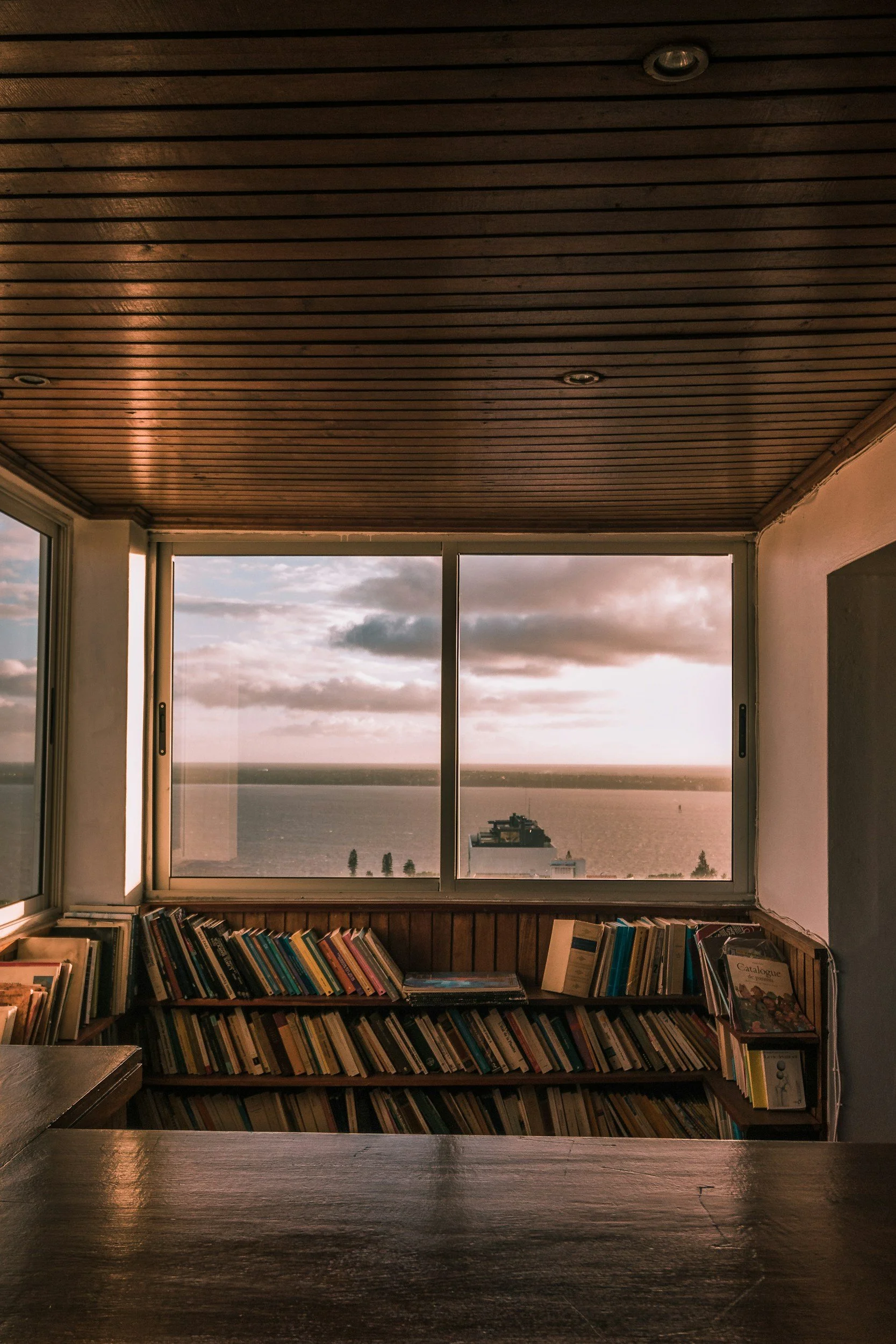
a library by the sea
Your forthcoming book explores sea libraries around the world. How has that research changed your understanding of your own project?
For years I tried to write the story of how I ended up here by the sea after being born and raised in a city and doing something entirely different with the first thirty years of my life. But in a culture centred around "I," it's very easy to keep retelling your own journey and looking back again and again. The point is to see where you are and keep moving forward – to be the one who doesn't know, who keeps growing, making mistakes, asking questions, pushing boundaries, discovering something new also about yourself.
So I stepped back from this idea, and an email arrived from a publisher. I pitched the idea, and suddenly I was writing a book about sea libraries around the world and not about just my library.
The research has made me realise that the Sea Library was never just about this room. It is part of something much bigger – a worldwide network of people who care deeply about books, water, memory, and imagination. That has been both humbling and deeply moving. I am very glad I changed the course of my pen.
What makes a library a “sea library”?
A sea library can be any library that is connected to the sea in one way or another. Some are connected to the sea by their location: floating libraries, beach libraries, etc. Others are defined by their collections: libraries devoted to oceanography, maritime history, navigation, naval archives, and so on. Then there are libraries whose architecture has been inspired by the sea – buildings shaped like waves, whales, or seashells – or libraries designed to withstand the sea itself, adapting to tsunamis, storms, or rising sea levels. And then, of course, there are the mythical sea libraries we can find in books, like Nemo’s library on his submarine Nautilus.
It would be impossible to list every example in the world, but that's not really the point. What I want to show is that there are remarkably many libraries connected to water. For years, I've had a feeling that books and the sea belong together. It was deeply encouraging to discover that others were thinking along similar lines – from UNESCO's work on ocean literacy within their Ocean Decade to the "Ocean Through Books & Libraries" – a brand new networking group within the Partners4Ocean Community, which I was recently invited to join. It made me feel I'd been listening to a real current all along, not imagining one.
What question do you wish people would ask you about the Sea Library, but almost never do?
“If the Sea Library were a book, what would it be like?” And I would tell about Enseaclopedia. It was the big book I once dreamed of writing, until I realised it was impossible. I imagined a book into which the sea would flow from every other book. All the dolphins from every sea story would gather in one chapter. All the mermaids would crowd into another. Every lighthouse, every whale, every storm, every shell would find its place.
What grew, though, was not a book but a book collection, something growing and breathing, not encapsulated and finished. And as Melville famously wrote in Moby-Dick, "the great floodgates of the wonder-world swung open."
And the collection wanted to be shared. It grew into something even more impossible than Enseaclopedia: a library in a small room in my house that connects people from all around our blue planet — The Sea Library.
To learn more about Anna’s extraordinary collection—and to help support the Sea Library—visit sea-library.com and follow @sealibrary on Instagram. Tp borrow a book, read about the sea, send the book back & borrow another one: sealibrarybooks@gmail.com.